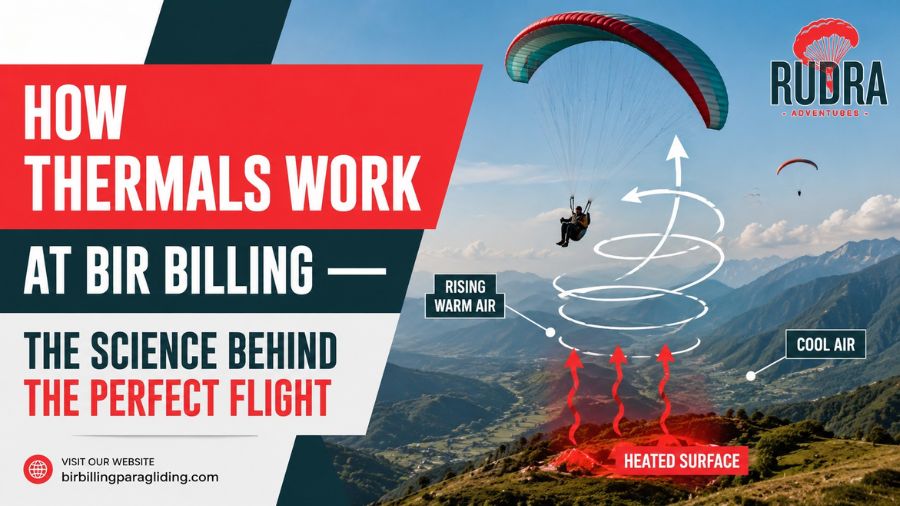

At Bir Billing, the sun heats the ground, and the warm air rises into the sky. These invisible rising air currents are called thermals. Paragliding pilots use them as a natural lift to go higher and stay in the air for a long time. These thermals help pilots to fly over the beautiful Dhauladhar mountains and enjoy beautiful views of the Himalayas.
Bir Billing is one of the most popular places for paragliding in India. Many pilots can fly high above the mountains and travel long distances without using any engine. The secret behind these amazing flights is a natural weather phenomenon called a thermal. Therefore, understanding how thermals in paragliding work helps explain why Bir Billing offers such good conditions for safe, enjoyable, and amazing flying adventures.


Table of Contents
What are Thermals?
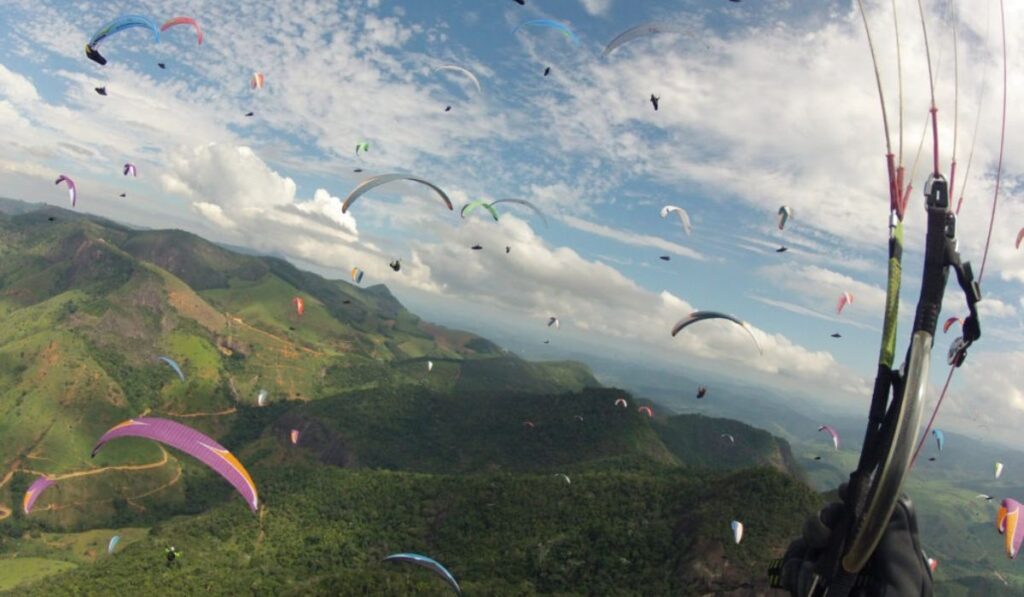
Think of a thermal as an invisible elevator made by nature. When the sun heats the ground, the air above it also becomes warm. This warm air is lighter than the cooler air around it, so it starts moving up into the sky. As it rises, it makes a natural lift that birds and paragliding pilots can use to fly higher without a motor. Sometimes, when the warm air goes high enough, it cools down and forms fluffy white clouds, which shows where the thermal is.
How Do Thermals Form at Bir Billing?
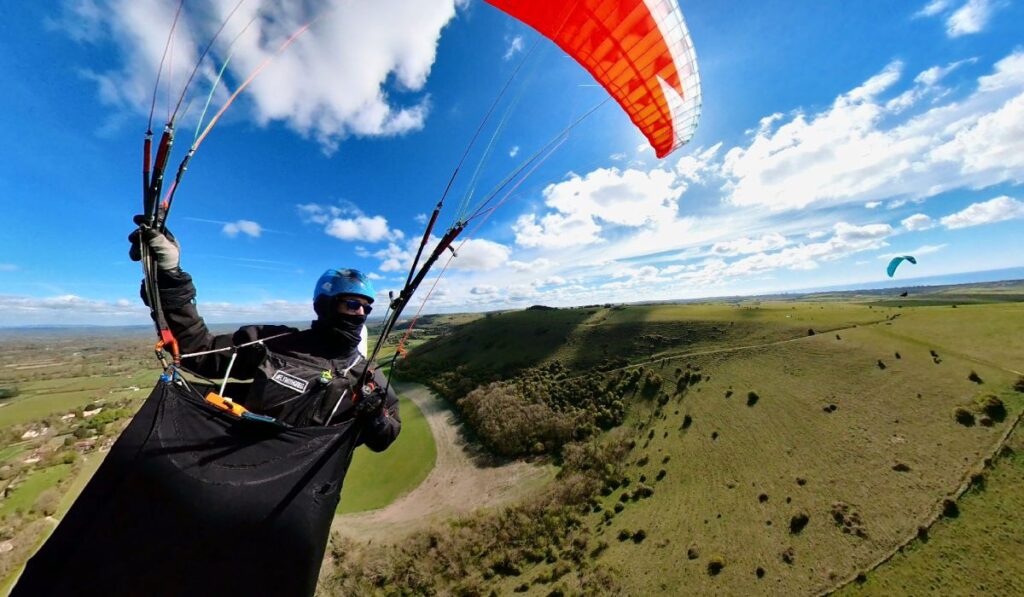
The secret behind the amazing flights at Bir Billing is the presence of Bir Billing thermals. These rising currents of warm air help paragliders gain height and stay in the air for a longer time.
1. The Role of Solar Heating
To understand how thermals work, imagine the sun acting like a giant heater. During the day, sunlight warms the ground, including rocks, soil, and grassy areas. The ground then heats the air just above it. As this air becomes warmer, it becomes lighter and starts rising into the sky, and makes thermals.
2. The Impact of Mountain Slopes
The mountain slopes around Bir Billing help make strong thermals in paragliding. Since the slopes face the sun, they heat up quickly. Then the air above these warm slopes also heats up and moves upward. Therefore, when warm air from different slopes comes together, it forms stronger thermals that help pilots climb higher.
3. Weather Conditions That Support Thermal Activity
Strong paragliding thermals usually form on sunny days with clear skies. If there are too many clouds, then less sunlight reaches the ground, which makes it harder for thermals to develop. Moreover, light winds are also important because strong winds can break the thermals apart.
These ideal weather conditions make paragliding in Bir Billing a popular adventure activity throughout the year. However, spring and autumn are often considered the best seasons because thermals are usually stronger and more trusted.
Factors Influencing Thermals
Not all thermals are the same. Some are strong, while others are weak. Their strength depends on several simple factors.
- Sunlight: The sun is the most important factor. When the sun shines brightly, it heats the ground more, which makes stronger thermals.
- Ground Type: Some surfaces, like rocks and dry land, heat up faster than forests or water. These warmer areas make better thermals.
- Mountain Slopes: Mountain slopes receive a lot of sunlight during the day. As they heat up, the air above them rises and forms stronger thermals.
- Wind: Light winds help thermals rise smoothly into the sky. Strong winds can break them apart and make them weaker.
- Clouds: Clear skies help the ground get more sunlight. If there are too many clouds, then they block sunlight and reduce thermal activity.
- Temperature: When the ground is much warmer than the air above it, then stronger thermals form.
- Season: Thermals are usually better during spring and autumn because the weather is clear and sunny, which makes flying conditions more favorable.
Why Bir Billing Has Excellent Thermals
Bir Billing is one of the most popular places for flying in India because of its strong air currents. These conditions make paragliding in Bir Billing smooth, safe, and enjoyable for pilots.
- Unique Himalayan Topography: The Himalayan landscape around Bir Billing plays a big role in making strong Bir Billing thermals. High mountains, deep valleys, and open slopes help warm air rise easily, which supports long and stable flights.
- Ideal Climate and Sunshine: Plenty of sunshine and clear weather help make strong paragliding thermals. When the sun heats the ground, warm air rises and forms lift that pilots can use to stay in the air longer.
- Valley and Ridge Effects: The valley and ridge system in Bir Billing guides rising air upward, which makes thermals stronger and more stable. This natural movement of air is an important part of thermals in paragliding, which helps pilots gain height and enjoy better flight control.
How Paragliding Pilots Use Thermals
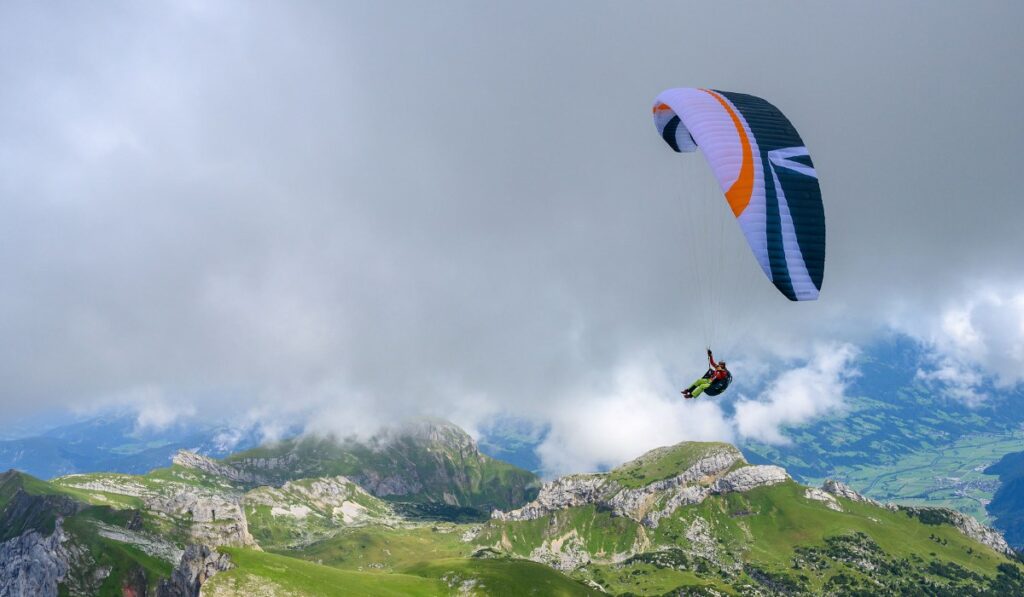
Paragliding pilots use rising warm air called thermals to fly higher and stay in the sky for a long time. These thermals in paragliding act like natural lifts in the air.
- Finding Thermals in the Sky: Pilots look for small signs in the sky and on the ground to find thermals. Birds flying in circles in one place are a big clue. Moreover, small white clouds or shaky air also show where warm air is rising.
- Gaining Altitude Without a Motor: When a pilot flies into a thermal, the warm rising air slowly lifts the paraglider upward. This means they can go higher without any engine or fuel. It feels like floating upward in the sky.
- Staying Airborne for Longer Flights: Pilots do not stay in just one thermal. They move from one rising air area to another to keep gaining height. This helps them stay in the air for a long time and enjoy long-distance flying, like in cross country paragliding.
Signs of Thermal Pilots Look For
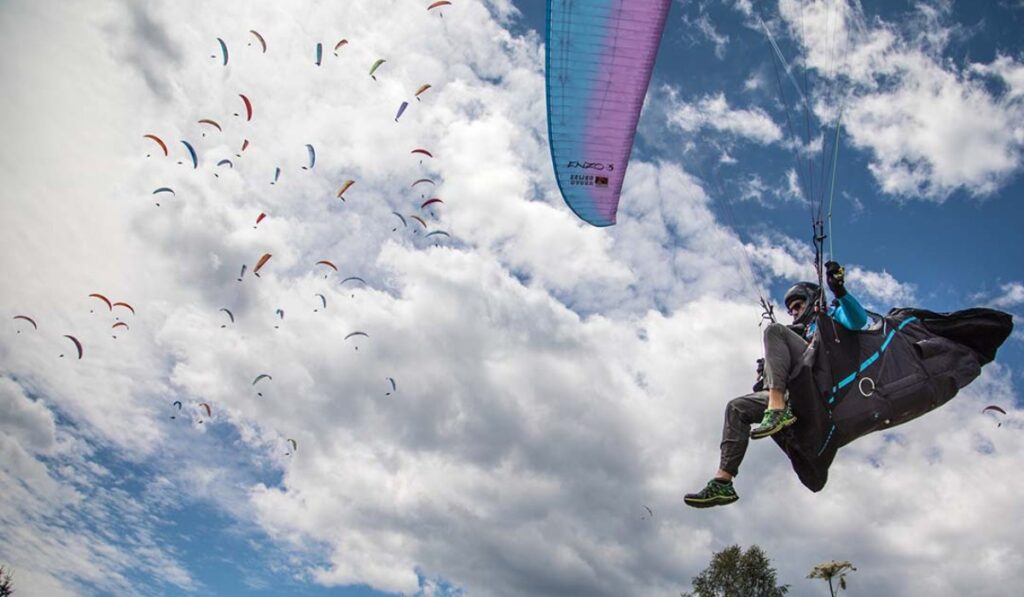
Pilots cannot see thermals directly, so they look for natural clues in the sky and on the ground. These signs help them find rising warm air and use it for flying higher.
- Birds Circling in the Sky: When birds like eagles or vultures are flying slow circles without flapping their wings, it often means they are using rising air. Pilots watch this as a key sign of paragliding thermals.
- Cloud Formation and Wind Patterns: Small fluffy clouds can show where warm air is rising and cooling at the top. Along these clouds, changes in wind or slightly bumpy air also help pilots find thermals in the sky.
- Ground Features That Generate Lift: Hot surfaces like rocks, dry fields, and open slopes heat up faster and create rising air above them. These areas are important clues for thermals in paragliding.
- Dust or Leaves Rising: If pilots see dust, dry grass, or leaves suddenly lifting from the ground, it can mean warm air is starting to rise and form a thermal.
- Sudden Change in Glider Speed: If the glider suddenly feels like it is going up or gaining lift without input, it often means the pilot has entered a thermal.
- Cumulus Cloud Streets: Sometimes clouds line up in a row across the sky. These “cloud streets” show areas where thermals are active and can help pilots plan long flights in paragliding in Bir Billing.
Challenges of Flying in Thermals
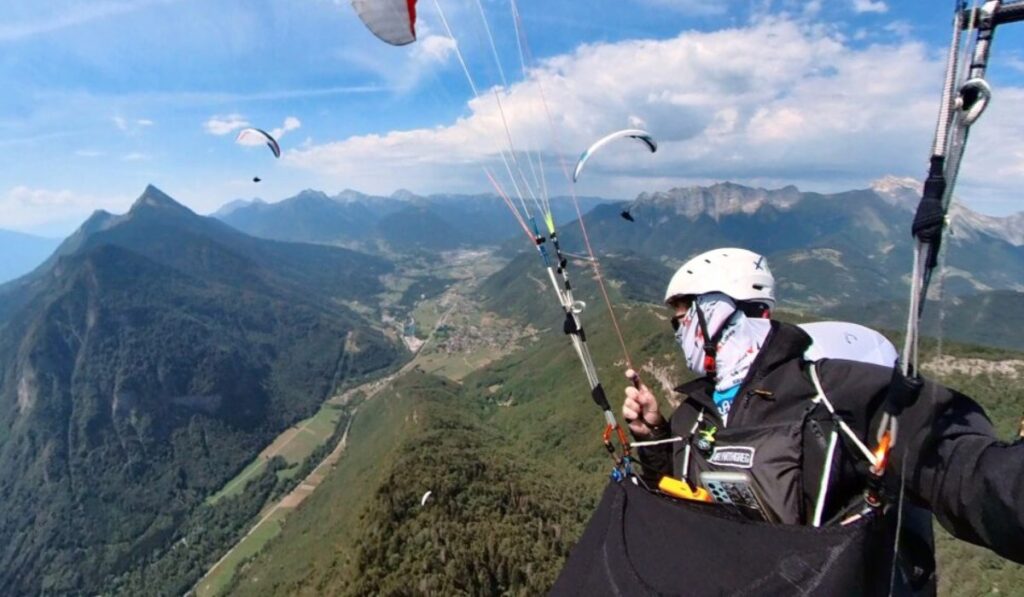
Flying in thermals is an amazing experience, but it also comes with some challenges. The rising air is not always smooth, so pilots must stay alert and careful.
- Turbulence and Strong Lift: Thermals can feel bumpy because the air is not stable. Sometimes the lift is very strong and pushes the glider up quickly, which can be hard to control if conditions change suddenly.
- Importance of Pilot Skill and Training: Handling thermals needs proper training and experience. Pilots must learn when to enter a thermal, how to stay inside it, and when to leave it safely. Even in tandem paragliding, where a passenger flies with a trained pilot, safety and smooth control are always the top priority.
- Safety Considerations: Weather can change fast in the sky, so pilots always check wind, clouds, and air movement before flying. Good safety choices are very important in thermals in paragliding.
The Science Behind the Perfect Flight
A perfect flight at Bir Billing happens when sun, wind, and mountains all work together. From the high take-off point at Billing, pilots can easily catch rising warm air and fly long distances over the Dhauladhar mountains.
- Thermal Generation & Triggering: The sun heats the rocky mountain slopes. This makes the air above them warm and light, so it rises up like an invisible column. Besides that, mountain winds help push and guide this rising air, which makes it stronger for paragliding thermals.
- The Thermal Core: There is one main strong lifting area inside a thermal called the “core.” The air is weaker or shaky inside the core. Pilots turn their gliders in circles to stay inside this core and keep going higher. This is an important part of how thermals work.
- Ridge Lift Synergy: When wind hits the mountains, it is pushed upward and creates extra lift along the slopes. Pilots use this lift and also connect it with thermals to gain more height. This is why Bir Billing thermals are so strong.
- Reading the Signs: Pilots look for clues like fluffy clouds and birds flying in circles. These signs show where warm air is rising. This helps pilots find lift during paragliding in Bir Billing.
Best Time to Experience Thermals at Bir Billing
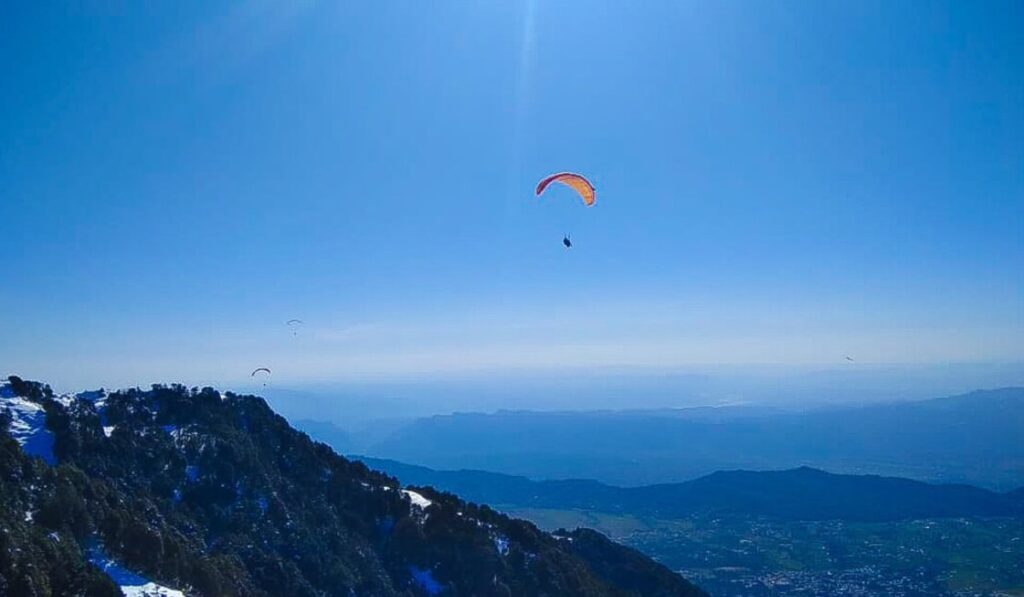
The timing of your flight plays a big role in how strong and smooth the thermals will be. At Bir Billing, both seasons and time of day decide how high and how long pilots can fly using these thermals.
1. Season-Wise Flying Conditions
| Season | Time Period | Thermal Conditions | Flying Experience |
| Spring | March-May | Very strong thermals due to strong sunshine and cool upper air. | Best for high and long flights with clear Himalayan views. |
| Autumn | September-November | Stable and reliable thermals with clear skies. | Smooth, long, and enjoyable flying conditions. |
| Monsoon | July-August | Weak or no thermals due to rain and clouds. | Flying mostly stopped for safety. |
| Winter | December-February | Weak thermals and cold air. | Short, gentle flights on sunny days only. |
2. Daily Thermal Cycles
| Time of Day | Thermal Strength | Conditions | Best For |
| 9:00 am-11:00 am | Weak to building | Calm and smooth air | Beginners and tandem paragliding |
| 11:00 am-2:00 pm | Strongest thermals | Active and sometimes bumpy air | Experienced pilots and cross country paragliding |
| 2:00 pm-5:00 pm | Weakening thermals | Smoother and calmer air | Relaxed flying |
Conclusion
Thermals are the main reason why flying at Bir Billing feels so special. The sun, mountains, wind, and weather all work together to create rising warm air that helps pilots fly high and stay in the sky for a long time. Moreover, when you understand thermals in paragliding, it becomes clear why Bir Billing is one of the best flying places in the world and why many people join a Bir Billing Paragliding course to learn and experience it.
Therefore, if you also want to learn and experience thermal paragliding, then you can reach out to Rudra Adventures. We are a reliable paragliding company that offers safe and trained paragliding experiences. Our team helps people enjoy the thrill of flying while making sure there is proper safety and professional support throughout the journey.
Also Read:
Bir Billing paragliding
paragliding course in Bir Billing
Bir Billing paragliding cost
Bir Billing weekend trip package
cross-country paragliding in Bir Billing
People also ask
Why is Bir Billing famous for thermal flying?
Bir Billing offers strong and consistent thermals, favorable wind conditions, and ideal mountain terrain, making it one of the world's best destinations for cross-country paragliding.
When are thermals strongest in Bir Billing?
Thermals are usually strongest between 11:00 AM and 3:00 PM, when the sun has warmed the ground enough to generate powerful rising air currents.
Can beginner pilots fly in strong thermals?
Beginners should fly only under the guidance of certified instructors. Strong thermals can be challenging, so proper training and weather assessment are essential for safe flying.
How do pilots find and use thermals during a flight?
Pilots identify thermals by observing bird activity, cloud formation, terrain features, and variometer readings. They circle within the rising air to climb higher before continuing their flight.